|

12 December 2014 Today's topic: Pixel Power! With one set of pages an extension of the other, my digital portfolio and digital imaging web pages were recently merged into 'Pixel Art' primarily because keeping one separate and apart from the other just didn't make sense. What served as rationale for fusion or consolidation of the pages? Two common threads. Thread #1 is that I am responsible for all content in both sets of pages. Thread #2 is that all content in both sets of pages, past and present, is conveyed to you via pixel power. Short for Picture Element, a pixel is a single point in a graphic image. I would add to that in this instance it is a single point in a graphic image displayed on a screen or monitor. Akin to the Benday process which will be examined just a bit later, a pixel is the smallest addressable element in an all points addressable display device; so it is the smallest controllable element of a picture represented on the screen. Huh? Wait... I get it. That was my initial reaction. But how to demonstrate it? There are oodles of examples for this on the web but making sense of the concept can be accomplished with just one, so I created the image below, named it 'Orb' and then took a few pictures of it. Each picture zoomed in or enlarged Orb by a factor of 2. Say hello to 'Orb'...
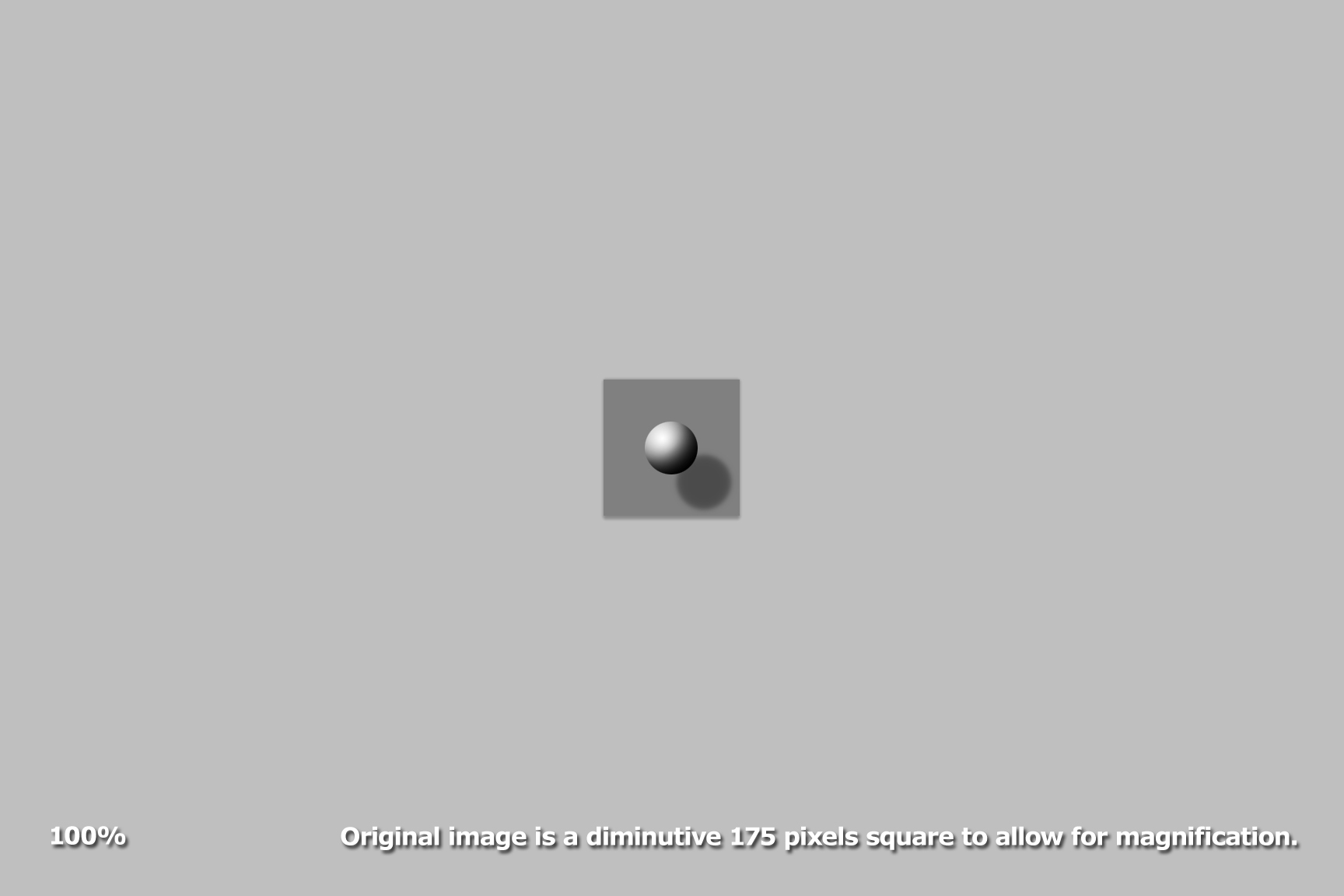
100% Original image is a diminutive 175 pixels square to allow for magnification.
3200%
3200% Maximum magnification frame depicts 1944 pixels, or 54 x 36, less than 1/2 orb area. A pixel is the smallest addressable element in an all points addressable display device; so it is the smallest controllable element of a picture represented on the screen. In the image above, which is an enlargement of Orb's center, each square is a pixel. Each pixel is a singular shade of grey.
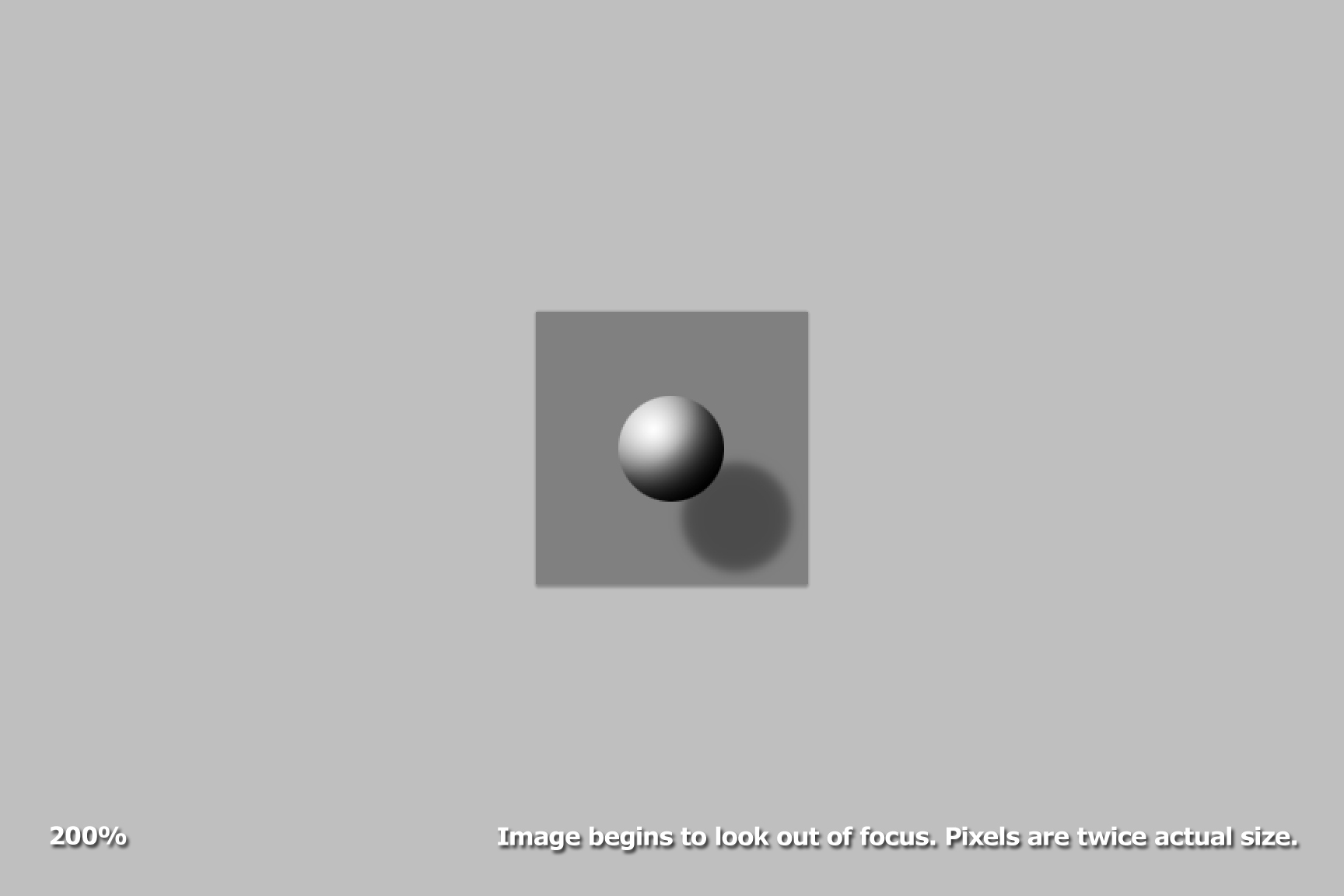
200% Image begins too look out of focus. Pixels are twice actual size. Zoom image for a better look.
400% Orb top left reveals square nature of pixels. Zoom image for a better look.
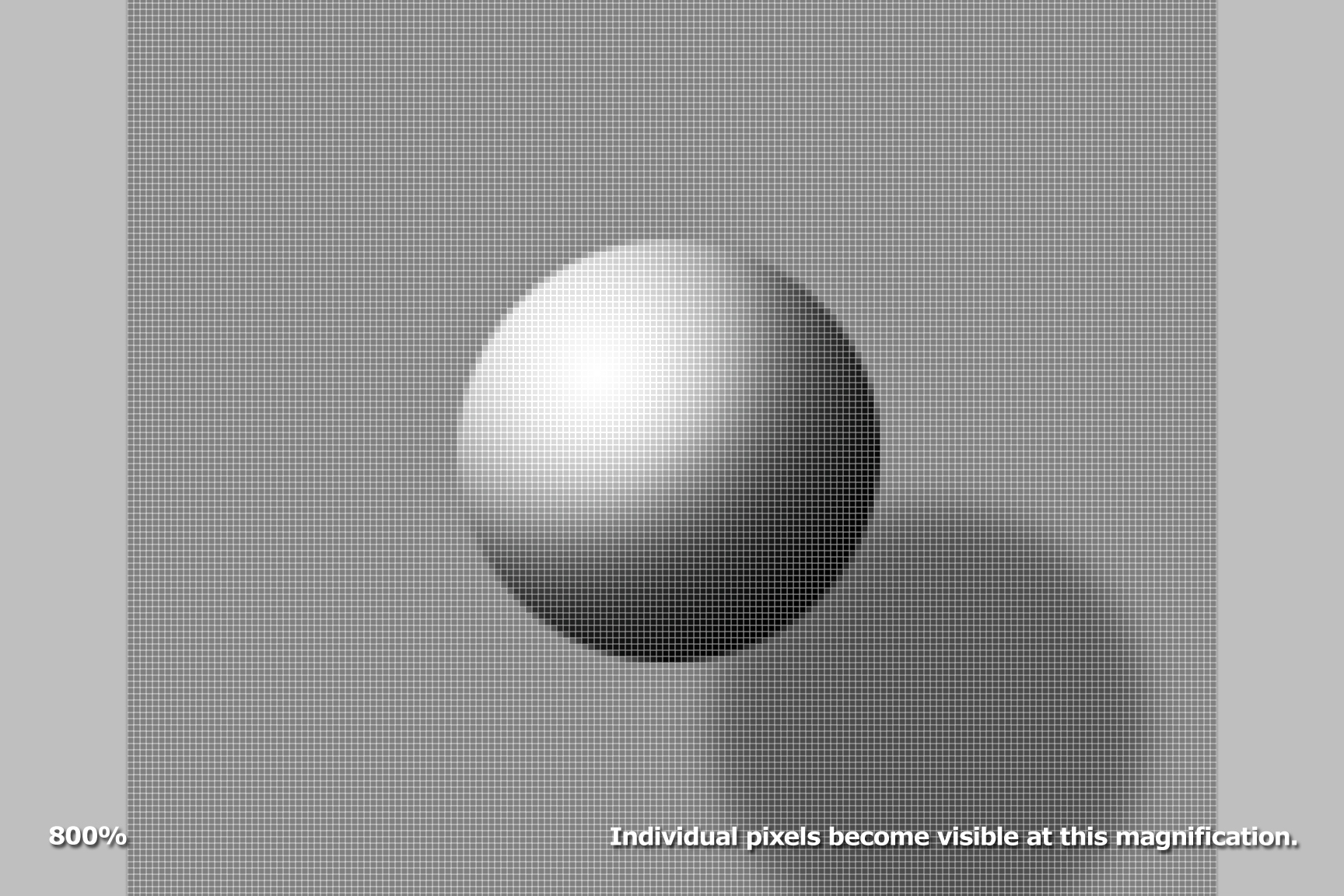
800% Individual pixels become visible at this magnification. Zoom image for a better look.
1600% Orb fits inside 4624 pixel square. (68 x 68) Zoom image for a better look.
Put simply, pixels are the building blocks of digital display. Written with pen and ink, pencil or any other means by which one can write including crayons, markers, chalk, paint Thanks to pixel power we 'see' curves even when they aren't there. If you don't believe me, grab a magnifying glass and have a look at the screen you're using to read this. Every work of art has an appropriate viewing distance. You wouldn't show a wallet sized photo to someone that's on the other side of a large room, say 20 feet away and expect them to actually see it anymore than you would be able to appreciate a massive billboard by standing just a few inches away from it. The same rule of 'appropriate viewing distance' applies to pixels. Typically pixels are indiscernable however what they depict can become indiscernable when we look too closely or over magnify them. Compare 'Orb' at 100% and 3200%.
Until next time...
Digital Imaging, Photo Restoration, Web and Graphic Design in Jarrettsville, MD 21084. Local to Harford, Baltimore, Cecil and Southern York County with limited service worldwide.
|




![[Valid RSS]](valid-rss-rogers.png "Validate my RSS feed")